
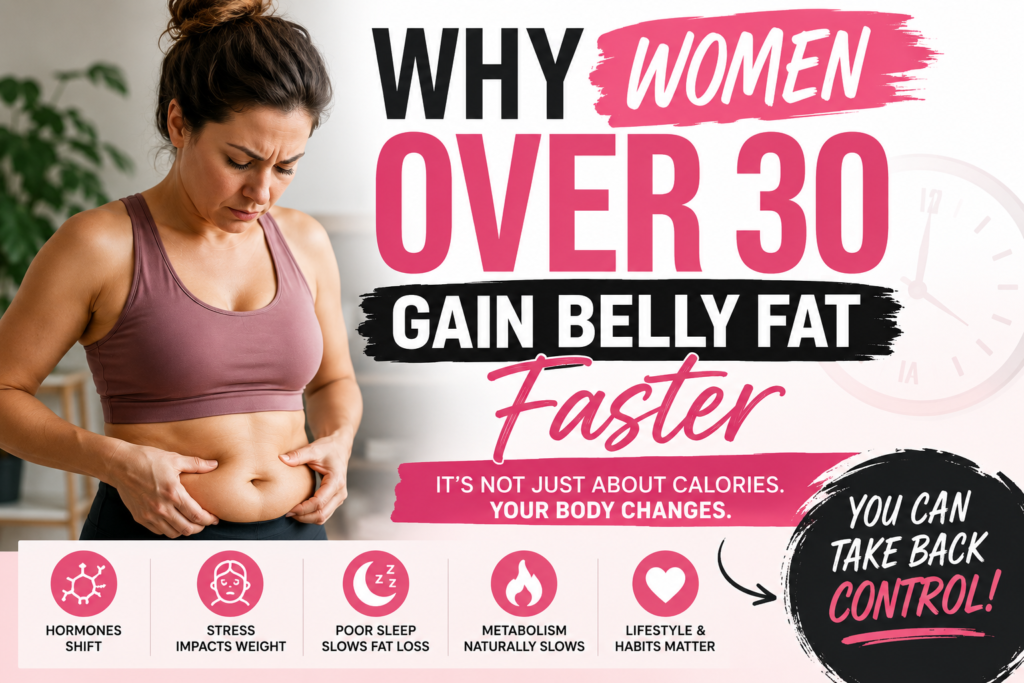
Losing weight after 30 often feels very different. Many women notice more belly fat, stronger cravings, lower energy, and slower progress even when they try to stay healthy. However, this does not mean your body is failing. Instead, your body may simply need a different approach.
For many busy women, weight gain is connected to hormones, stress, sleep quality, metabolism, emotional eating, and daily habits. Fortunately, small realistic lifestyle changes can support healthier long-term weight management without extreme dieting.
Why Belly Fat Changes After 30
As women get older, the body naturally changes. Metabolism may slow down, muscle mass can decrease, and stress levels often become higher. In addition, hormonal changes may affect appetite, cravings, mood, and energy levels.
Because of these changes, many women notice that belly fat becomes harder to lose after 30. Nevertheless, healthy weight loss is still possible with the right habits and a more balanced lifestyle.
Hormones Can Affect Weight Loss
Hormones play a major role in how the body stores fat and uses energy. For example, changes in estrogen and cortisol levels may increase cravings and encourage fat storage around the stomach area.
At the same time, stress hormones may affect sleep quality and hunger signals. As a result, many women feel tired more often and struggle with emotional eating. Therefore, a realistic weight loss plan should support both physical health and emotional balance.
Stress and Emotional Eating
Stress is one of the most common hidden reasons behind weight gain. When stress levels stay high for long periods, the body may produce more cortisol. Consequently, cravings for sugary foods and comfort eating may become stronger.
In many cases, emotional eating is not caused by hunger alone. Instead, emotional eating may come from exhaustion, anxiety, frustration, or daily pressure. Because of this, building calming routines and healthier coping habits can support better long-term results.
Sleep and Metabolism Matter
Sleep is often ignored during weight loss journeys. However, poor sleep can affect hormones related to hunger and appetite. In addition, low-quality sleep may reduce energy levels and increase cravings during the day.
Meanwhile, metabolism also changes with age. Since muscle mass naturally decreases over time, the body may burn fewer calories than before. Fortunately, regular movement and strength-based exercises may help support a healthier metabolism.
Small Habits Create Better Results
Extreme diets often create short-term results but may become difficult to maintain. Instead of trying to be perfect, many women benefit more from simple sustainable habits.
For example:
- Walking daily
- Drinking more water
- Eating more protein
- Sleeping earlier
- Managing stress levels
- Reducing emotional eating triggers
- Building realistic workout routines
Although these habits may seem small at first, consistency can create powerful long-term changes.
A More Realistic Approach to Weight Loss
Healthy weight loss after 30 is not about punishment. Instead, it is about understanding your body and building habits that fit your real lifestyle.
Most importantly, women do not need extreme diets to feel healthier, stronger, and more confident. Real progress often starts with balance, patience, and realistic daily actions.
Final Thoughts
Many women feel frustrated when weight loss becomes harder after 30. However, your body is not broken. Instead, your body may simply need more support, better recovery, and healthier long-term habits.
With better sleep, balanced nutrition, stress management, movement, and emotional awareness, sustainable progress becomes much more realistic.
Ready to Learn More?
If you want a more realistic wellness approach designed for busy women over 30: